
From France to Los Angeles: Welcoming Audilab to House Ear Institute
An international visit brought 30 ENT specialists to House Ear Institute for a firsthand look at our pediatric hearing care, scientific research, and innovations in hearing rehabilitation.
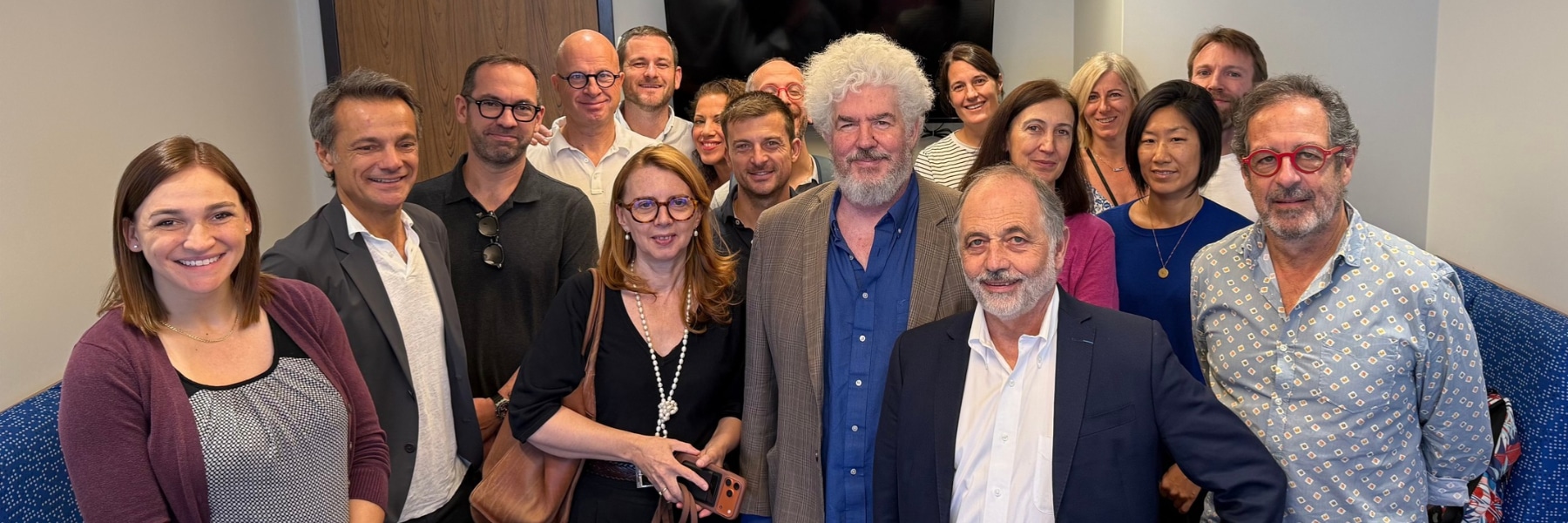
This October, House Ear Institute had the pleasure of welcoming 30 ear, nose, and throat (ENT) specialists from Audilab, one of France’s largest hearing-care networks. Audilab has also been a long-time donor to the House Ear Institute.
In Los Angeles for the 2026 American Academy of Otolaryngology–Head and Neck Surgery Foundation (AAO-HNSF) Annual Meeting, the visiting specialists took the opportunity to explore the research, clinical expertise, and innovations that continue to build on House’s longstanding legacy of advancing hearing health.
Inside House: From Patient Care to Scientific Discovery.
During their visit, Audilab’s specialists explored two key areas of House’s work: specialized pediatric hearing care and research aimed at addressing real-world hearing and communication challenges.
At House Children’s Hearing Center, Dr. Reynita Alcisto, AuD, Clinical Director, and Wendy Carrillo, AuD candidate and Audiology Resident, introduced visitors to the center’s specialized pediatric hearing care services, highlighting the importance of early intervention, individualized treatment, and ongoing support for children with hearing loss and their families
In the research wing, pediatric research scientist Dr. Kelsey Klein, PhD, AuD, CCC-A, demonstrated how eye-tracking technology helps researchers better understand how children process spoken language, particularly in challenging listening environments such as noisy classrooms. Dr. Klein also shared insights into an ongoing longitudinal study examining children’s listening, language development, and quality of life over time. Together, these studies aim to identify factors that influence outcomes and inform more effective approaches to pediatric hearing care
Expanding on House’s broader research efforts, Sean Lang, Clinical Research Coordinator, and Shemms Najjar, MPH, Hearing Science Accelerator Coordinator, introduced current research initiatives and the House Institute Foundation’s Hearing Science Accelerator (HSA). This initiative brings together experts in hearing science and other disciplines to address critical unanswered questions and pursue innovative approaches to hearing disorders for which better treatments are needed.
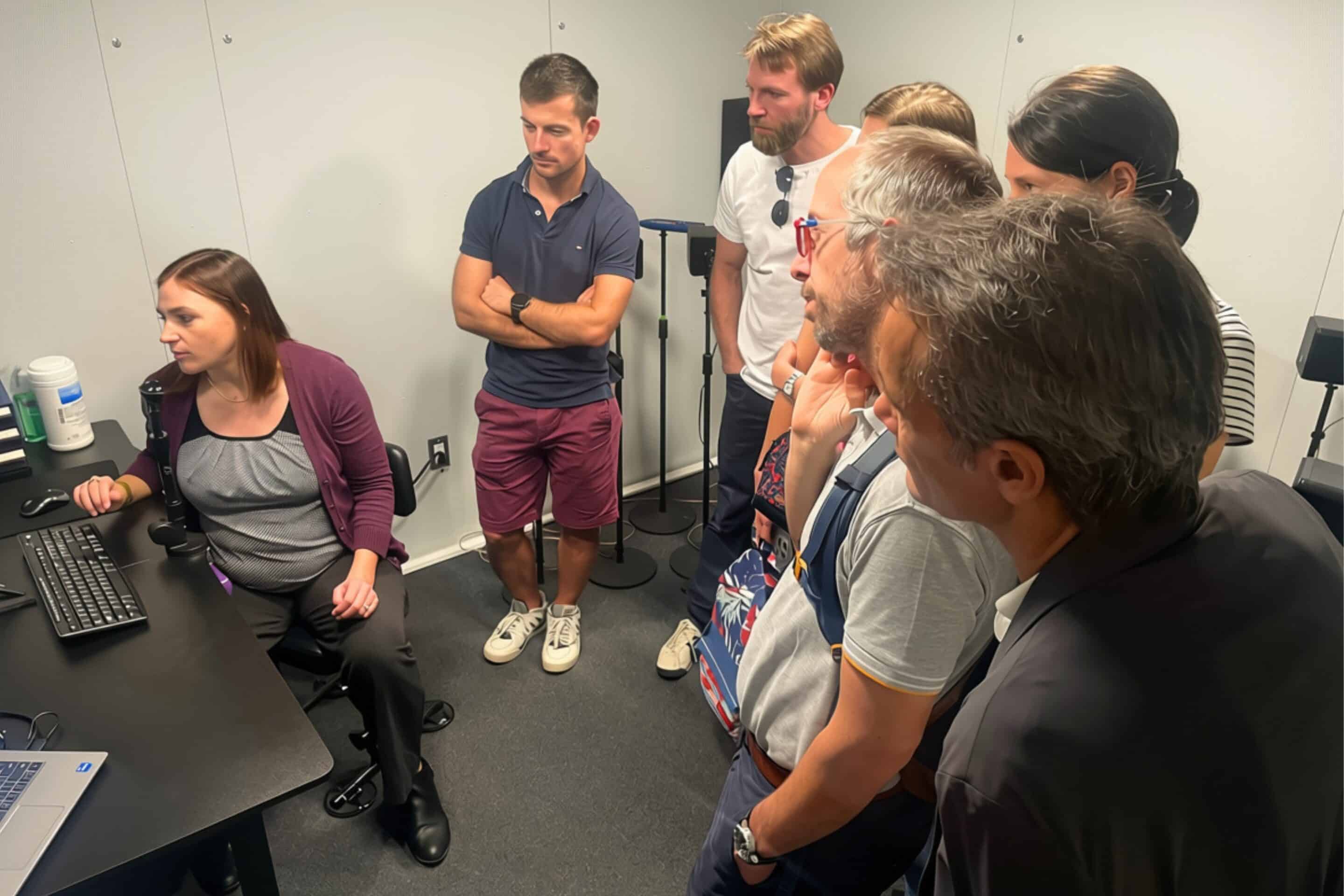
Dr. Kelsey Klein (seated) demonstrates eye-tracking technology
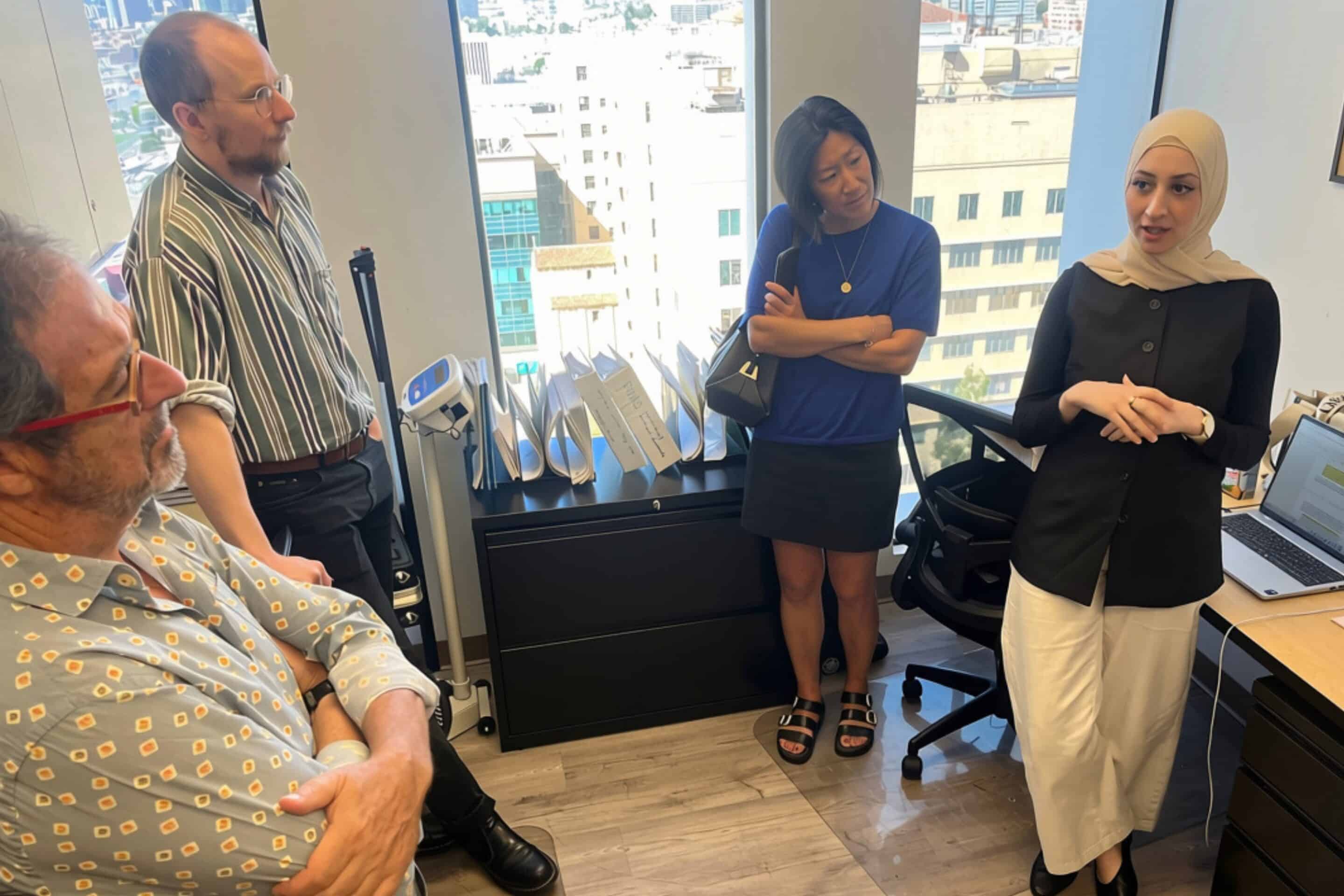
Sean Lang (standing near the window), and Shemms Najjar (far right)
Hearing Innovation Across Languages and Borders
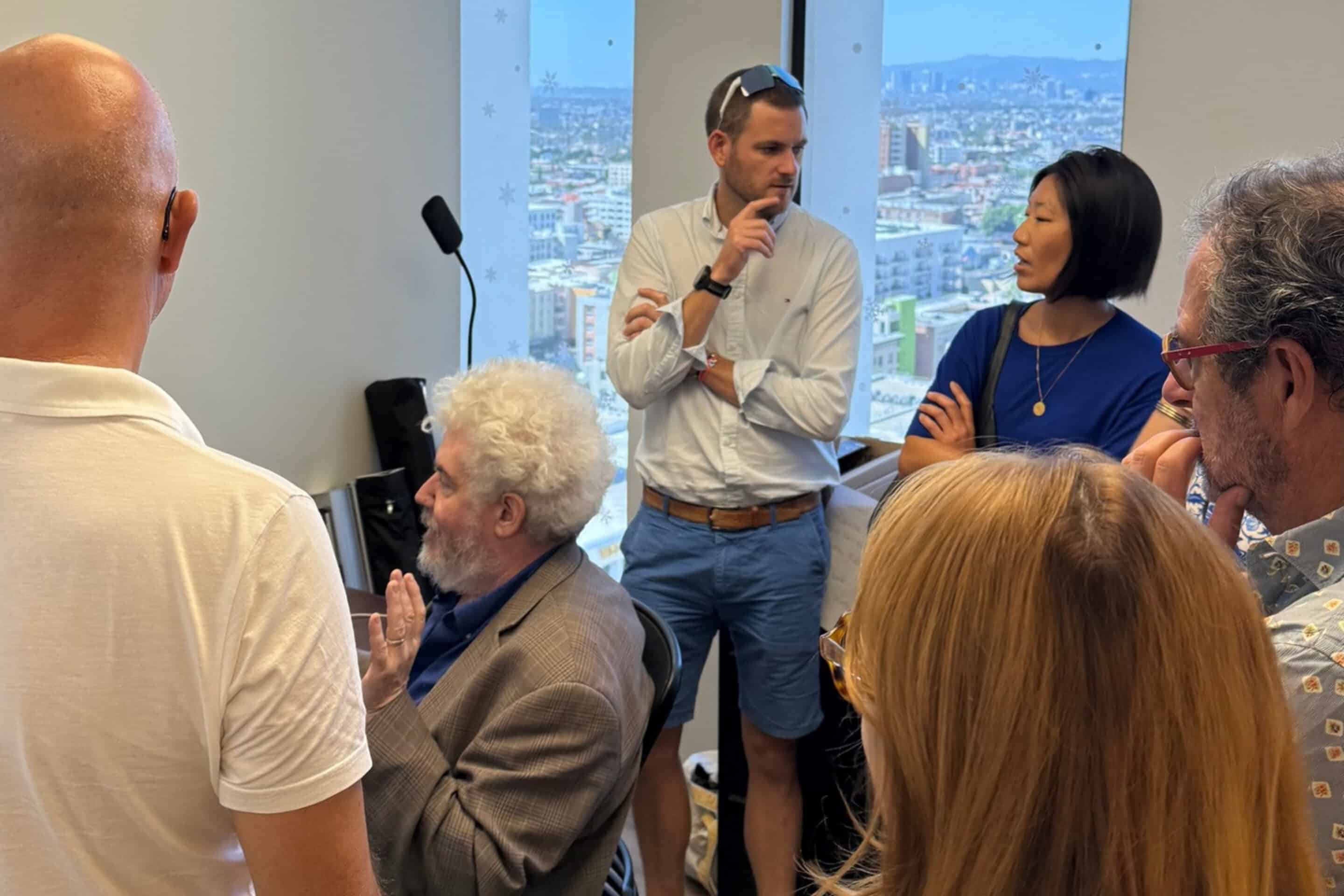
A highlight of the visit was a demonstration of the French-language version of AngelSound, a computer-based auditory training program designed to help cochlear implant recipients strengthen their listening skills.
House research scientist Dr. John Galvin, PhD, shared insights from his research and introduced the French-language adaptation, developed in collaboration with Dr. Qian-Jie Fu, PhD, and Prof. David Bakhos, MD, PhD.
AngelSound offers a compelling example of how hearing research can translate into practical resources that support patients beyond the clinic. By providing auditory training in French, the program helps make hearing rehabilitation more accessible to cochlear implant recipients across languages and communities.
The demonstration also sparked discussions about the possibility of bringing AngelSound to mobile devices, potentially making auditory training more convenient and accessible to patients in their daily lives.

Dr. John Galvin (seated) demonstrates AngelSound
Connecting Expertise, Expanding Possibilities
Welcoming specialists from one of France’s leading hearing-care networks was an opportunity to share the breadth of work underway at House, from specialized clinical services and pediatric research to innovations with the potential to benefit patients worldwide.
It also underscored the international reach of House’s mission and the importance of connecting clinical expertise with scientific discovery. Through exchanges like these, researchers and clinicians can share perspectives, explore new approaches, and identify opportunities to advance hearing health beyond geographic boundaries.
We extend our sincere thanks to the Audilab team for their visit, thoughtful discussions, and shared commitment to improving hearing care. We look forward to the connections and opportunities this exchange may inspire.
Discover more about the research and innovations underway at House Ear Institute: hei.org/research